
Tooth Worn Down or Broken? Ways to Rebuild It
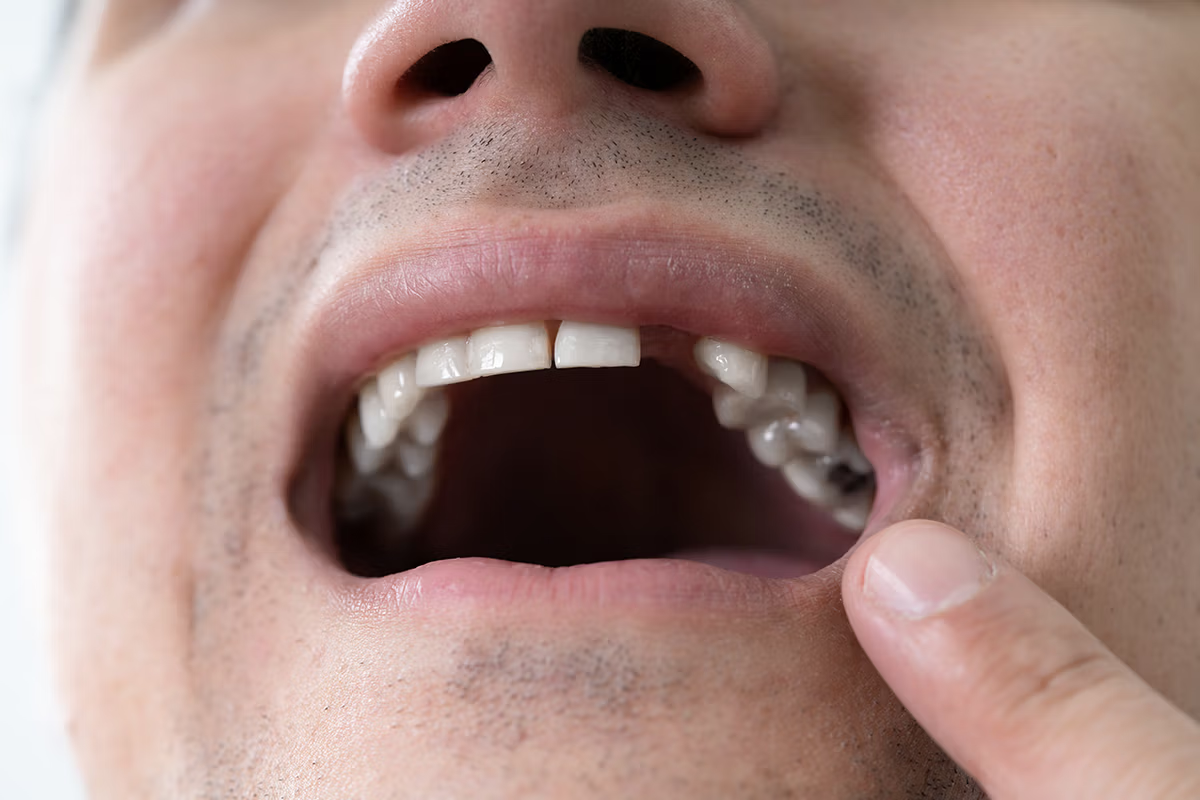
A tooth does not have to be completely broken to need restorative treatment.
Years of chewing, an old filling, tooth decay, grinding, or an accident can gradually weaken a tooth. You might notice a small chip, a rough edge, increased sensitivity, or a tooth that simply looks shorter than it used to.
The good news is that there are several ways to rebuild damaged tooth structure. The right treatment depends on how much of the tooth is still healthy, where the damage is located, and how much support the tooth needs.
At McKinney Family Dentistry in Poway, the first step is an examination so the condition of the tooth can be evaluated before deciding how to restore it.
Teeth are designed to handle years of biting and chewing, but they are not indestructible.
Damage can happen for different reasons. A tooth may become weakened by decay or a large filling. It may chip or fracture after biting into something hard. Repeated pressure can also contribute to wear over time.
Sometimes the change is easy to see. Other times, the problem is more subtle. A tooth may feel different when you bite down, become sensitive to hot or cold, or develop a rough area that your tongue keeps finding.
The appearance of the tooth does not always tell the whole story. A dental examination can help determine whether the damage is limited to the outer portion of the tooth or whether deeper structures are involved.
No.
A crown can be an excellent way to protect a significantly weakened tooth, but not every damaged tooth needs one. If only a small amount of tooth structure has been lost, a filling or bonding may be enough.
The goal is to restore the tooth with an appropriate amount of treatment, not automatically choose the largest restoration.
Dental fillings are commonly used to repair cavities and restore areas where tooth structure has been lost to decay.
If the remaining tooth is strong and the damaged area is relatively limited, a filling may restore the shape and function of the tooth without covering the entire tooth.
This is one reason an examination matters. A tooth that looks like it has a small problem may have more extensive damage underneath, while another tooth that looks rough or worn may only need a relatively simple repair.
A crown may make more sense when a tooth has lost enough structure that a filling would not provide adequate support.
A crown fits over the remaining tooth and helps protect it from the forces of normal biting and chewing. It may be considered when a large portion of the tooth has fractured, when an older filling has left the surrounding structure weakened, or when a tooth needs additional protection after root canal treatment.
McKinney Family Dentistry also offers same-day crowns using CEREC technology. For appropriate cases, the practice can create a custom crown in the office rather than relying on the traditional process of sending the restoration to an outside laboratory.
That does not mean every crown can or should be completed in one visit. The condition of the tooth and the specific restoration needed still determine the treatment approach.
A filling or crown is not the only possible solution.
If a tooth has become infected or inflamed inside, a root canal may be necessary to remove the affected pulp, clean and disinfect the tooth, and seal it. Preserving the natural tooth may then require a restoration to protect what remains.
If a tooth cannot be saved and needs to be removed, replacement options can include a bridge, denture, or dental implant depending on the situation.
These treatments serve different purposes, which is why a restorative treatment plan should be based on the condition of the tooth and the surrounding structures rather than appearance alone.
Wear can be harder to notice than a sudden fracture.
A tooth may gradually become shorter, flatter, or more sensitive. If you have noticed a change in how your teeth meet when you bite, or you are seeing more wear than you used to, it is worth bringing up during a dental visit.
The cause matters. Simply rebuilding the worn portion may not address whatever is causing the tooth to continue wearing down.
Your dentist can evaluate the tooth and discuss what may be contributing to the problem before recommending a restoration.
There is no single restoration that is right for every damaged tooth.
The decision may depend on:
The surrounding teeth and your overall oral health may also affect the treatment plan.
The important part is understanding why a particular restoration is being recommended. At McKinney Family Dentistry, patients can discuss their options and ask questions before moving forward with treatment.
Do not assume a small break is harmless.
A chipped edge may be relatively minor, but a fracture can sometimes extend farther into the tooth than it appears from the outside. If you have pain, sensitivity, a sharp edge, or a noticeable piece of tooth missing, contact a dentist for an evaluation.
If the tooth is causing significant pain or the injury happened suddenly, prompt dental care is especially important.
The sooner the tooth is evaluated, the sooner you can find out whether a simple repair is possible or whether the tooth needs more substantial protection.
A worn or broken tooth does not automatically mean you need extensive dental work. In some cases, a filling or bonding can repair a smaller area. A more weakened tooth may benefit from a crown, while teeth with deeper problems may require root canal treatment or another restorative approach.
The key is finding out what is actually happening before choosing a treatment.
You can learn more about your options through our Restorative Dentistry services, which include treatments designed to repair or replace damaged and missing teeth.
If you have a tooth that is worn, chipped, cracked, or broken, contact McKinney Family Dentistry in Poway to schedule an evaluation and discuss the best way to rebuild it.
Sometimes. If the amount of lost tooth structure is limited and the remaining tooth is strong enough, a filling or bonding may be appropriate. Larger fractures may require a crown or another restoration.
No. The appropriate treatment depends on how much tooth structure has been lost and what is causing the wear. An examination can help determine how much support the tooth needs.
Some damaged teeth can be restored in one appointment. McKinney Family Dentistry offers same-day crowns using CEREC technology for appropriate cases, although treatment time and the number of appointments depend on the tooth and restoration needed.
It depends on the type and extent of the damage. Some minor chips may remain stable, while cracks or larger fractures can become more extensive. Having a damaged tooth evaluated can help determine whether treatment is needed.
The decision depends largely on how much healthy tooth structure remains and whether the tooth can withstand normal biting forces with a filling. Your dentist can examine the tooth and explain which option provides appropriate support.
Yes. If the pulp inside a tooth becomes infected or inflamed, root canal treatment may be needed to remove the affected tissue and preserve the natural tooth.
Ready to rebuild a damaged tooth? Visit McKinney Family Dentistry to learn more about restorative treatment in Poway or contact the office to schedule an evaluation.